
StatusCake

Monday Update – this week’s changes

website monitoring

We’ve got a few things to update you on this week, and you can find all of the details below:

Bulk Upload for TCP and PING type tests

Today we’ll be adding Bulk Upload capabilities for both PING and TCP type tests. This will be done with the “Add Bulk” button next to the URL field when adding a new test. It’s previously been possible to do this for the HTTP type tests, and we’ll continue to implement changes with the aim of supporting all possible test-types.

Mobile Responsiveness updates

As part of our commitment to improving the mobile experience for all StatusCake users we’re undertaking a gradual redesign of the mobile website view. This week you’ll see big differences and usability improvements in the Domains section, as well as the Bulk Update tool. We’ll continue to make and update you on these improvements as work progresses!

Brazilian Currency now supported

Great news for our customers residing in Brazil – you can now take a StatusCake plan in your local currency, cutting down on currency conversion costs and giving you more bang for your buck. As well as subscriptions we also offer SMS credits in Brazilian real.

Force Test tool added to SSL

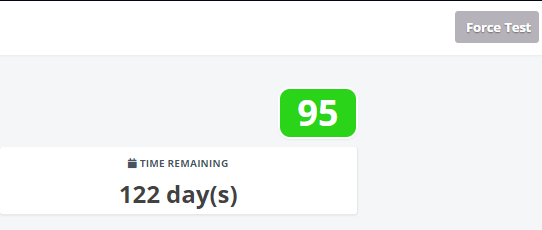
It’s now possible to force an SSL test once per 24 hours in order to grab the most up to date results. This can be done from the details/info page for each SSL test, and after pressing the button you can expect to have data within a maximum of 5 minutes.

SSLv3

Share this

More from StatusCake

Alerting Is a Socio-Technical System

3 min read In the previous posts, we’ve looked at how alert noise emerges from design decisions, why notification lists fail to create accountability, and why alerts only work when they’re designed around a clear outcome. Taken together, these ideas point to a broader conclusion. That alerting is not just a technical system, it’s a socio-technical one. Alerting

Designing Alerts for Action

3 min read In the first two posts of this series, we explored how alert noise emerges from design decisions, and why notification lists fail to create accountability when responsibility is unclear. There’s a deeper issue underneath both of those problems. Many alerting systems are designed without being clear about the outcome they’re meant to produce. When teams

A Notification List Is Not a Team

3 min read In the previous post, we looked at how alert noise is rarely accidental. It’s usually the result of sensible decisions layered over time, until responsibility becomes diffuse and response slows. One of the most persistent assumptions behind this pattern is simple. If enough people are notified, someone will take responsibility. After more than fourteen years

Alert Noise Isn’t an Accident — It’s a Design Decision

3 min read In a previous post, The Incident Checklist: Reducing Cognitive Load When It Matters Most, we explored how incidents stop being purely technical problems and become human ones. These are moments where decision-making under pressure and cognitive load matter more than perfect root cause analysis. When systems don’t support people clearly in those moments, teams compensate.

The Incident Checklist: Reducing Cognitive Load When It Matters Most

4 min read In the previous post, we looked at what happens after detection; when incidents stop being purely technical problems and become human ones, with cognitive load as the real constraint. This post assumes that context. The question here is simpler and more practical. What actually helps teams think clearly and act well once things are already

When Things Go Wrong, Systems Should Help Humans — Not Fight Them

3 min read In the previous post, we explored how AI accelerates delivery and compresses the time between change and user impact. As velocity increases, knowing that something has gone wrong before users do becomes a critical capability. But detection is only the beginning. Once alerts fire and dashboards light up, humans still have to interpret what’s happening,

Want to know how much website downtime costs, and the impact it can have on your business?

Find out everything you need to know in our new uptime monitoring whitepaper 2021

*By providing your email address, you agree to our privacy policy and to receive marketing communications from StatusCake.