

Want to know how much website downtime costs, and the impact it can have on your business?
Find out everything you need to know in our new uptime monitoring whitepaper 2021


Today we’ve introduced an overhaul of our reporting tool which will make it much easier to get the exact data you want to be sent out to the people who need to see it.
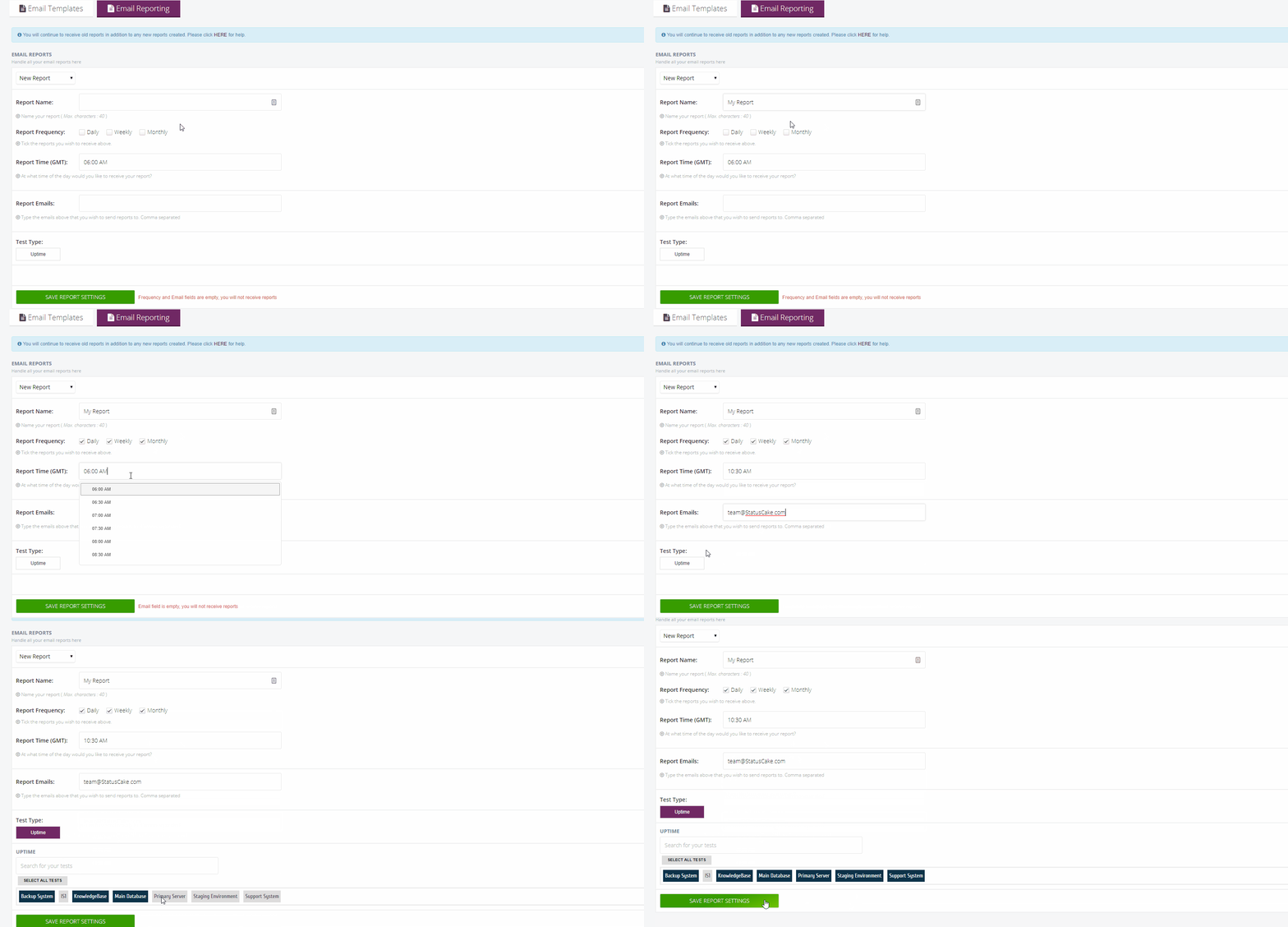
Previously it was only possible to send an automatic report for all uptime tests in your StatusCake account. A big change that’s been brought in by our update is that you can now select a specific group of tests to be reported on; this means that you’ll no longer need to worry about clients or staff seeing tests that aren’t relevant to them within the reports that are sent.
As you could now need to configure more than one report, a new tab has been added within User Details section under “Email Reporting”
From here you can manage existing reports, and configure new ones:
At current only uptime type tests are supported within these new reports, however, we will be working to include other test types in the coming weeks, meaning that combined reports for test types will soon be a reality!
To get started with our new reporting right away simply visit our Reporting Section within User Details, and if there are any questions on the new functionalities just let us know!
Share this

3 min read The allure of OpenClaw is undeniable. You deploy a highly autonomous, self-hosted AI agent, give it access to your repositories and inboxes, and watch it reason through complex workflows while you sleep. It is the dream of the ultimate 10x developer tool realized. But as any veteran DevOps engineer will tell you: running an LLM-backed
7 min read There are cloud outages, and then there are us-east-1 outages. That distinction matters because failures in AWS’s Northern Virginia region rarely feel like ordinary regional incidents. They tend instead to expose something larger and more uncomfortable: too much of the modern internet still behaves as though one place is an acceptable concentration point for infrastructure,
7 min read Artificial intelligence is making software easier to produce. That much is already obvious. Code that once took hours to scaffold can now be drafted in minutes. Boilerplate, integration logic, tests, refactors and small internal tools can be generated with startling speed. In some cases, even substantial pieces of implementation can be assembled quickly enough to
10 min read Whilst AI has compressed the visible stages of software delivery; requirements, validation, review and release discipline have not disappeared. They have been pushed into automation, runtime and governance. The real risk is not that the lifecycle is dead, but that organisations start acting as if accountability died with it. There is a now-familiar story about
4 min read How AI Is Shifting Software Engineering’s Primary Constraint For most of the history of software engineering, the primary constraint was production. Code was expensive, skilled engineers were scarce, and shipping features required concentrated human effort. Velocity was limited by how fast people could reason, implement, test, and deploy. That constraint shaped everything from team size,
5 min read Autonomous Code, Trust Boundaries, and Why Governance Now Matters More Than Ever In Part 1, we looked at how AI has reduced the cost of building monitoring tools. Then in Part 2, we explored the operational and economic burden of owning them. Now we need to talk about something deeper. Because the real shift isn’t
Find out everything you need to know in our new uptime monitoring whitepaper 2021