


StatusCake

Using StatusCake to test login, and a variety of other transactions

ssl monitoring

With StatusCake you can use a variety of methods to test basic “transactions”, including forms that deal with login, data protection, and others.

The Tools

Form and Raw POST dataWe can send form or raw POST data along with our normal test requests, in many cases when dealing with HTML forms we can submit this data to the form in order to test the associated function.

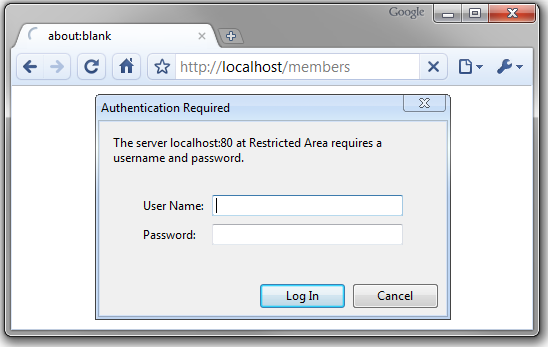
Basic Authentication login For pages where there’s not a HTML form to submit to, and instead access is gained through basic authentication. You can see an example of a Basic Auth dialogue below:

1

Content/String MatchOnce we’ve submitted to the form or gained access to the page, it’s important to then verify that the expected page and results are returned. To do this we can use our Content Match feature. This will run a string match for one or multiple strings on the resulting page.

Final URLYou can use the Final URL feature to confirm that the page you’ve reached at the end of the process contains the correct URL, great for catching erroneous errors.

The Method

First of all, you should assess which tools you need to use, and where the testing should be targeted. If you are dealing with a HTML based login form you should submit Form POST data, and your target should be the URL of that form rather than the main page URL.

2

If it’s a basic authentication job then your URL target should be that of the main page, and you should use the basic auth fields on the test on our end to gain access:

3

For other types of HTML form, which could be for a wide range of uses, you just need to grab the field submission names from the source code, these can again be entered in the Form POST field invalid JSON format with your desired values. This way you can use the feature to test pretty much any type of entry form.

4

Validating the Results

Once your form or login dialogue is being actioned, it’s time to set up validation of the process, this can be done in two ways.

String Match – Using the String Match field on the test you can confirm the presence of one or more strings in the source of the resulting page after whichever process has been carried out. You can be alerted optionally if these strings are found/not found.

Final Location – With this, you can verify that the final URL in the process is an expected URL, for example, if you are expecting http://mysite.com/allgood.php ,  but the URL reached is http://mysite.com/notgreat.php – you will receive an alert for the test.

Share this

More from StatusCake

Monzo’s Stand-In Held Up on Wednesday. Some Customers Still Had a Bad Day.

3 min read On Wednesday 19 August, Monzo had an outage. DownDetector logged more than 3,000 reports by midday. Monzo’s own statement was direct about what it did next: it activated Monzo Stand-in, its fully independent backup bank, while it investigated an issue affecting customers. By the end of the day, Monzo said the issue was resolved and

What Broke GitHub on August 17 and How Retries Made the Incident Worse

3 min read GitHub’s incident on 17 August 2026 ran from 13:28 to 21:15 UTC, seven hours and forty-seven minutes. At peak, web and API traffic saw error rates of around 20%, while archive and raw-content downloads reached roughly 50%. SAML and OIDC authentication, SCIM and Team Sync were affected alongside Git operations, Actions, Pages, Issues, Pull Requests

Automate StatusCake Monitoring with viaSocket

3 min read Adding a new website, launching a customer portal, or handing a service to a new team should be straightforward. Setting up monitoring is part of that job, but it is easy for a manual step to be missed when information is spread across several systems. StatusCake now integrates with viaSocket, giving teams a way to connect

Website Monitoring Checklist: What to Track Beyond Uptime

7 min read A website may be standing and still be in trouble. It may answer a request, return a cheerful 200 OK, and yet load slowly enough that visitors begin to lose patience. Its certificate may be nearing expiry. Its domain records may have changed. A server may be filling its disk in the background, patient and

Blog

Beyond Uptime: Building a Self-Healing OpenClaw Observability Stack

3 min read The allure of OpenClaw is undeniable. You deploy a highly autonomous, self-hosted AI agent, give it access to your repositories and inboxes, and watch it reason through complex workflows while you sleep. It is the dream of the ultimate 10x developer tool realized. But as any veteran DevOps engineer will tell you: running an LLM-backed

Want to know how much website downtime costs, and the impact it can have on your business?

Find out everything you need to know in our new uptime monitoring whitepaper 2021

*By providing your email address, you agree to our privacy policy and to receive marketing communications from StatusCake.