
Want to know how much website downtime costs, and the impact it can have on your business?
Find out everything you need to know in our new uptime monitoring whitepaper 2021

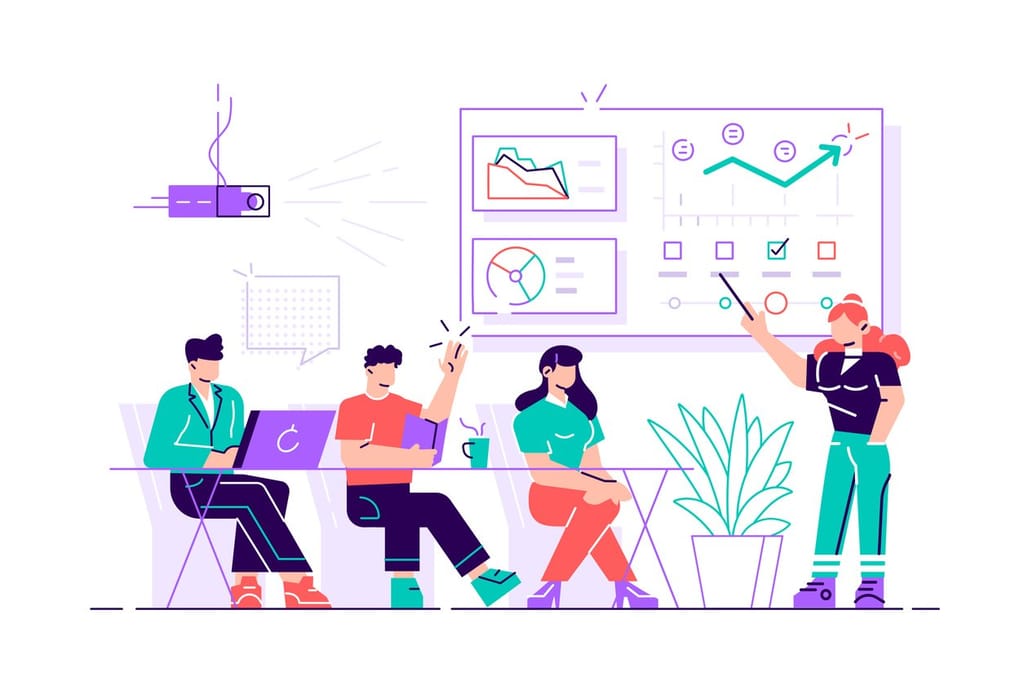
In the previous post, we explored how AI accelerates delivery and compresses the time between change and user impact. As velocity increases, knowing that something has gone wrong before users do becomes a critical capability.
But detection is only the beginning. Once alerts fire and dashboards light up, humans still have to interpret what’s happening, make decisions under pressure, and act. Whether an issue becomes a minor incident or a major one often depends less on the original failure and more on how well the system supports people at that moment.
This is a human factors problem, and it’s one software teams can’t afford to ignore.
In industries where failure has serious consequences, such as aviation, medicine, and construction, most incidents involve human action (or inaction). That fact doesn’t lead to blame. It leads to better system design.
The underlying assumption is simple:
If one skilled, well-intentioned person can make a mistake, many others eventually will.
So instead of asking “Who caused this?”, those industries ask:
Software systems are no different.
Engineers are both builders and defenders of the systems they operate. When something goes wrong, “human error” usually points to unclear signals, confusing tooling, ambiguous workflows, or systems that behave differently under stress than expected.
Treating that as personal failure guarantees repetition. Treating it as system feedback creates leverage.
When incidents happen, engineers rely on a familiar set of tools:
This is the software equivalent of a cockpit.
In calm conditions, experienced engineers can navigate noisy systems reasonably well. But incidents don’t happen in calm conditions. They happen under time pressure, with incomplete information, and often while multiple changes are in flight.
This is where cognitive load becomes the constraint.
When signals are noisy, contradictory, slow to update, or hard to trust, engineers are forced to spend precious mental energy just figuring out what’s real. Decision-making slows. Confidence drops. The risk of compounding mistakes increases.
That hesitation isn’t a human failing. It’s a system design problem.
Good engineering cockpits don’t just show more data. They reduce cognitive effort at the moment it matters most.
AI increases throughput. It lowers the cost of making changes. And that’s a positive shift, but it also means:
When something goes wrong, engineers are operating in denser, noisier environments. The number of decisions increases, while the time available to make them shrinks.
In this world, resilience doesn’t come from trying to remove humans from the loop entirely. It comes from designing systems that support human decision-making under pressure.
In aviation and medicine, checklists aren’t used because people are inexperienced. They’re used because people are human.
Even highly skilled professionals:
Checklists exist to counteract exactly that.
Software teams often resist checklists because they feel bureaucratic or slow. But well-designed checklists don’t replace expertise, they’re there to free it up. They externalise memory, reduce decision fatigue, and create safe defaults when clarity is hardest to come by.
As AI increases delivery speed, this kind of leverage becomes more important, not less.
The key is that effective checklists are:
Generic templates rarely work. Useful checklists evolve from moments where engineers hesitated, disagreed, or weren’t sure what to do next.
External monitoring isn’t about catching engineers out. It’s about giving them confidence.
When internal systems are noisy or inconclusive, independent signals help answer simple but critical questions:
That clarity reduces stress, speeds recovery, and helps teams act decisively rather than cautiously.
Tools like StatusCake provide that outside-in view. Not as an incident commander, but as a reliable reference point when it matters most.
Across teams of all sizes, a consistent pattern shows up:
AI doesn’t change this dynamic; it intensifies it.
So what does this mean in practice?
AI doesn’t just speed up systems. It increases the cognitive burden on the humans operating them.
Teams that thrive don’t eliminate human error. They design systems that make reality clear, reduce cognitive load, and support good decisions under pressure.
If AI is an amplifier, then human-centred system design is what keeps that amplification from turning into instability.
In the next post, we’ll make this concrete by looking at how high-performing teams use incident checklists in practice; not as bureaucracy, but as a way to reduce cognitive load when it matters most.
That’s how teams move faster, without losing control.

Share this
3 min read In the previous posts, we’ve looked at how alert noise emerges from design decisions, why notification lists fail to create accountability, and why alerts only work when they’re designed around a clear outcome. Taken together, these ideas point to a broader conclusion. That alerting is not just a technical system, it’s a socio-technical one. Alerting
3 min read In the first two posts of this series, we explored how alert noise emerges from design decisions, and why notification lists fail to create accountability when responsibility is unclear. There’s a deeper issue underneath both of those problems. Many alerting systems are designed without being clear about the outcome they’re meant to produce. When teams
3 min read In the previous post, we looked at how alert noise is rarely accidental. It’s usually the result of sensible decisions layered over time, until responsibility becomes diffuse and response slows. One of the most persistent assumptions behind this pattern is simple. If enough people are notified, someone will take responsibility. After more than fourteen years
3 min read In a previous post, The Incident Checklist: Reducing Cognitive Load When It Matters Most, we explored how incidents stop being purely technical problems and become human ones. These are moments where decision-making under pressure and cognitive load matter more than perfect root cause analysis. When systems don’t support people clearly in those moments, teams compensate.
4 min read In the previous post, we looked at what happens after detection; when incidents stop being purely technical problems and become human ones, with cognitive load as the real constraint. This post assumes that context. The question here is simpler and more practical. What actually helps teams think clearly and act well once things are already
3 min read In the previous post, we explored how AI accelerates delivery and compresses the time between change and user impact. As velocity increases, knowing that something has gone wrong before users do becomes a critical capability. But detection is only the beginning. Once alerts fire and dashboards light up, humans still have to interpret what’s happening,
Find out everything you need to know in our new uptime monitoring whitepaper 2021