What better way to boost morale during lockdown 3.0 than to have an afternoon filled with creativity and camaraderie (with just a hint of competition) with work colleagues. Materials were gathered prior to the day and were sent to everyone individually ensuring everyone would be able to participate (sadly our friend Pete Stirrup is in Canada at the moment which caused a slight logistical problem).
How Crafternoon kicked off
As the new lockdown ways of working insist, we all jumped on a Google Meets call at 5pm. Admittedly, we nattered away for a bit, for some of us, it was the first human interaction we’d had the whole day! As the social vibes got going, our host Hannah Cushion joined us and got us started with the afternoon’s social event.
What Crafternoon involved
The activity started with the team designing their soon-to-be mug art masterpieces (unfortunately, the National Gallery isn’t open to display our works). Hannah instructed us to first draw the company logo, second, a character found on our website, and finally something that represented each individual’s personality, something that when a person looks at their mug, they go, “Indeed, that’s so you!”.
Once everyone had come up with their Van Gogh-esque designs, the painting part of this afternoon had commenced. Just like the rest of the afternoon, it was rather fun to watch the different approaches that the team took to painting their mugs. Some drew on their mugs first, before painting over the lines, while others preferred a more direct approach to painting and just splattered paint all over it until it created some familiarity to their chosen design.
After the painting part of the social had finished, a presentation section was well and truly needed. This was the most exciting part of the event by far, especially since I could already tell we were all clearly artists in the making. We then got to see all of the beautiful creations that had emerged from such wonderful imaginations (and this was pre-cocktails!).
Our dear friend Mario Giraldo had chosen to paint his cat, Minty, as his personality symbol. Mario’s beloved cat has been with him for quite some time now and this was his way of immortalising her.
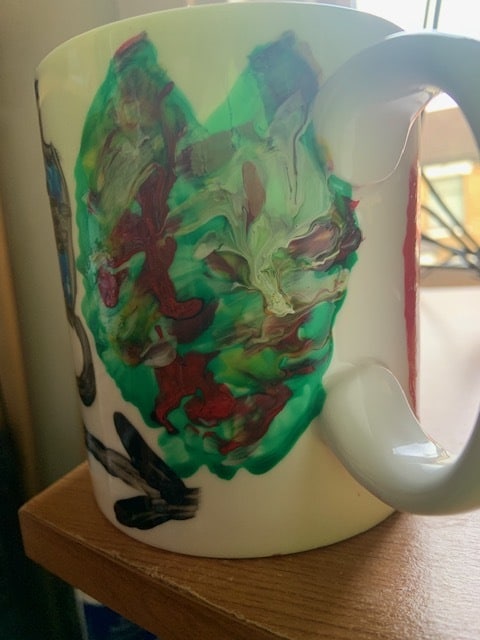
Dan Phillips had gone for a more abstract approach, the paint dripped along the mug, creating a more Salvador Dali or Edvard Munch like painting, which created a darker, more, sophisticated art.
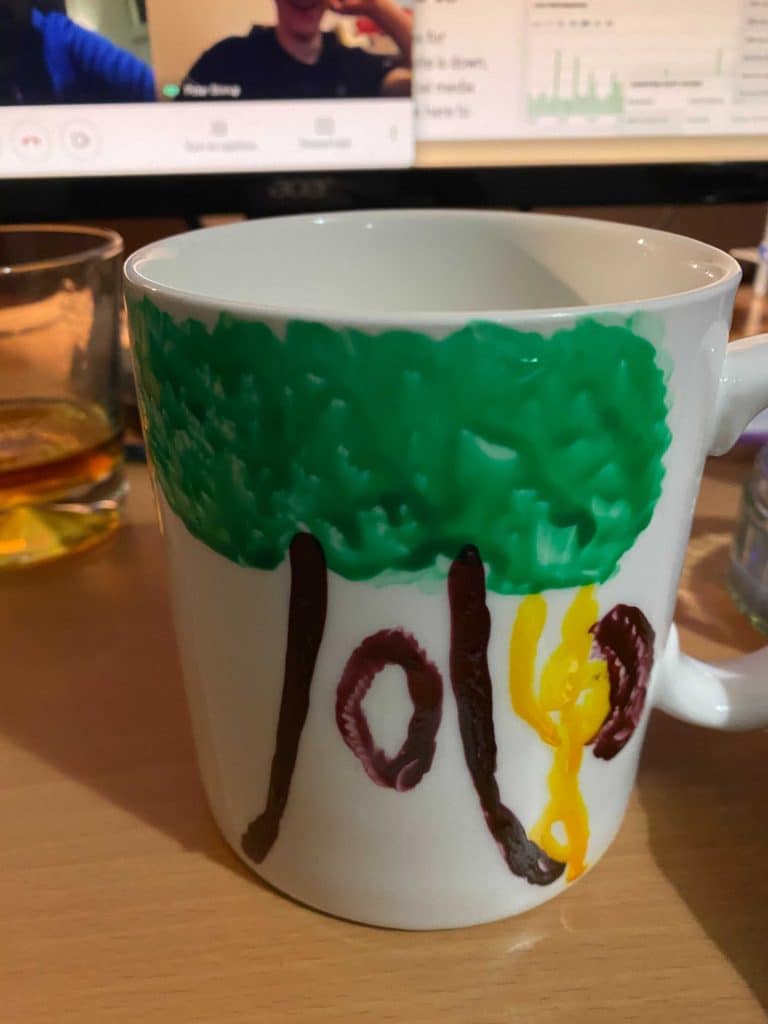
Hemm Kerrai chose to draw a tree. This symbolism of himself had come from his little helper, his niece, who was helping out with his painting. The tree symbolises their close bond; he explained that his niece likes to climb on his back just like a tree.
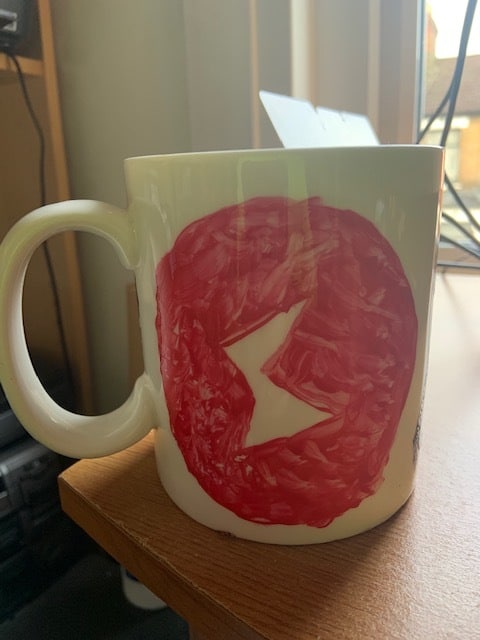
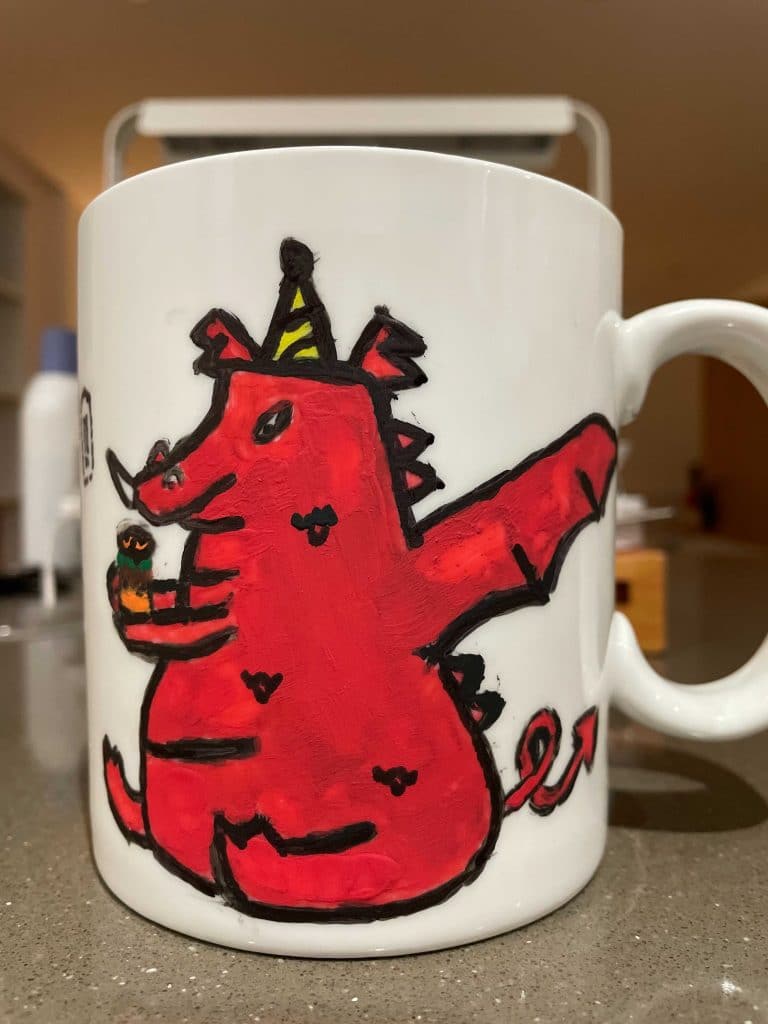
Tomas Basham painted The Welsh Dragon (Y Ddraig Goch) which signified his love for his country, Wales. If you’re now wondering what the painting looked like, well, I’ll quote the painter himself – “Curvaceous and having an insatiable hunger for burgers.”. Now that should get your imaginations stirring.
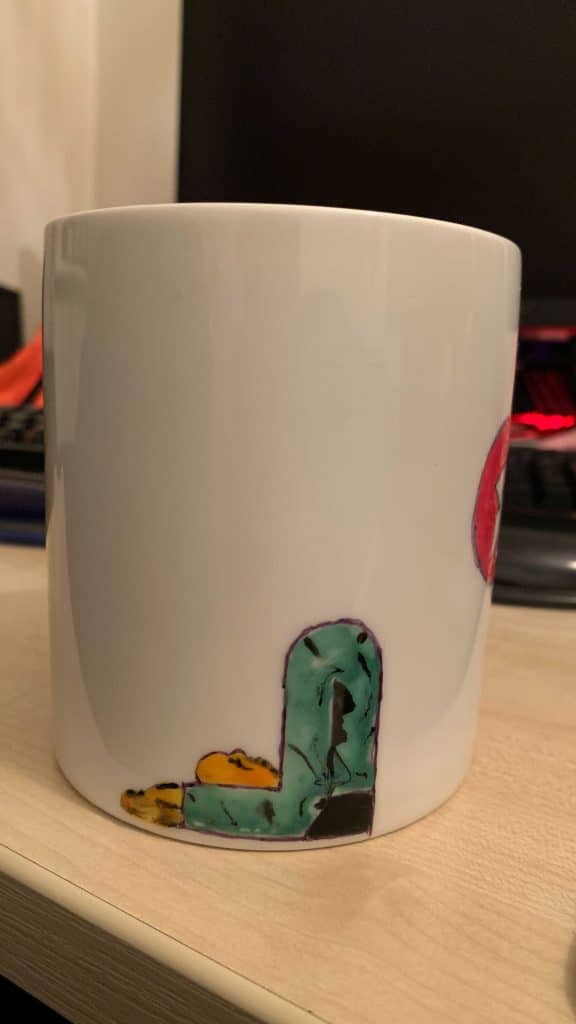
Being a new member of the dog owning community, Ian Cornish chose to paint a more risible image of him carrying his beloved dog Bruce’s unmentionables. This naturally provoked laughter from everyone, whilst Bruce strutted around on Ian’s camera without a care in the world.
Our host Hannah painted an aerial rope person as her personality symbol, which represents all her years of doing circus classes. She recently started doing aerial rope training and now describes her painting just like her aerialist abilities – “With grace and finesse”.
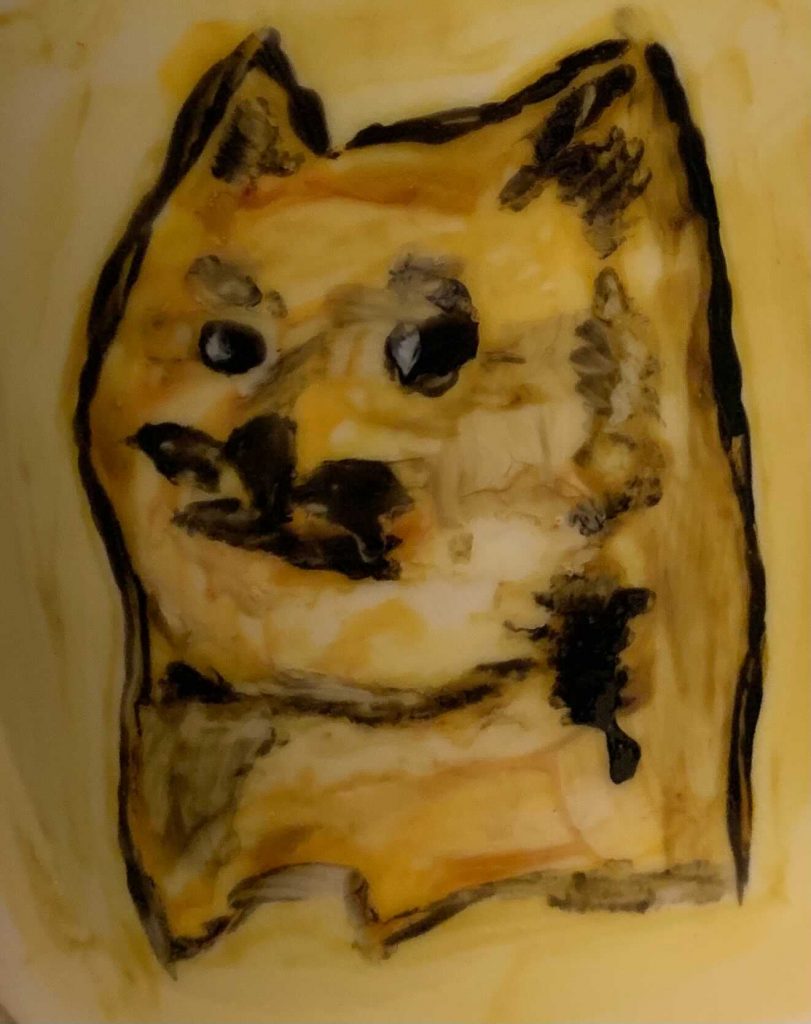
I decided to go for a lighter approach, choosing to paint a Van Gogh style dog meme on my mug. This sums up my personality which is to bring levity to situations and to always come up with a meme for it.
Lastly, James Barnes, our esteemed leader, chose to paint (we can call it backdrop) his mug with our company colour and what our customers would most associate with us – purple. Clearly, if there is something that can describe his personality, something that can be truly attributed to him, it would be the colour of his company.
Finally, after the presentation was done, the social was over and everyone went back to sitting in front of Netflix, drinking tea out of their newly crafted mugs. It had been a very successful event and therefore, there might be a part two of this blog so keep your eyes peeled!