StatusCake

Integration Spotlight: PagerDuty

statuscake

Our integration with PagerDuty.

We’ll go through some of the benefits of using this product in conjunction with StatusCake and overview the functionalities that are unique to this integration.

PagerDuty’s digital operations management platform empowers teams to proactively mitigate customer-impacting issues by automatically managing, categorizing, and assigning the incoming alerts from the StatusCake monitoring service. What’s more PagerDuty allows you to get in control of on-call responsibilities by easily configuring custom on-call schedules, rotations, and escalations.

PagerDuty can also add new notification possibilities

As well as intelligently assigning the right alerts to the right team members. An alert sent from StatusCake can then be converted into a phone call to the relevant person – meaning generally that more urgent issues are picked up faster.

By default, a new incident created in PagerDuty will become resolved at the point of StatusCake sending through the recovery alert. So most of the incident management will be automated for short downtimes and smaller issues, for anything more serious there are options within PagerDuty for escalation – and this will be intelligently directed to the correct on-call team. This is great for if you don’t want the entire team woken up for an issue that can be resolved by a particular member.

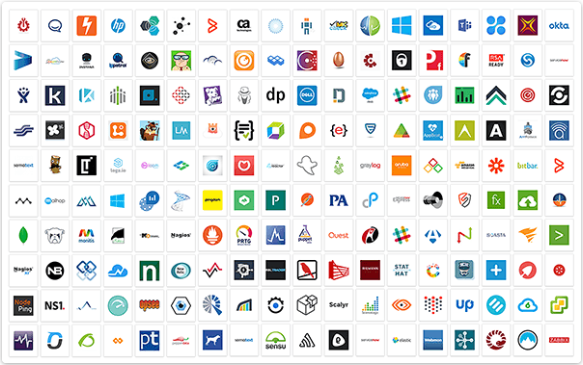
This integrations’ usefulness does not expire at the point of getting the alert either! PagerDuty incorporates a wealth of over 200 integrations which can be used to go further with the data sent in by StatusCake, whether it be tallying the incidents on a dashboard or generating a graph to show the results over time.

PDints

Once all is said and done and it’s time for a post-mortem following an incident, PagerDuty also has you fully covered as it supports and has in depth tools for incident classification, response automation, business-wide orchestration, and postmortem learning.

Share this

More from StatusCake

Designing Alerts for Action

3 min read In the first two posts of this series, we explored how alert noise emerges from design decisions, and why notification lists fail to create accountability when responsibility is unclear. There’s a deeper issue underneath both of those problems. Many alerting systems are designed without being clear about the outcome they’re meant to produce. When teams

A Notification List Is Not a Team

3 min read In the previous post, we looked at how alert noise is rarely accidental. It’s usually the result of sensible decisions layered over time, until responsibility becomes diffuse and response slows. One of the most persistent assumptions behind this pattern is simple. If enough people are notified, someone will take responsibility. After more than fourteen years

Alert Noise Isn’t an Accident — It’s a Design Decision

3 min read In a previous post, The Incident Checklist: Reducing Cognitive Load When It Matters Most, we explored how incidents stop being purely technical problems and become human ones. These are moments where decision-making under pressure and cognitive load matter more than perfect root cause analysis. When systems don’t support people clearly in those moments, teams compensate.

The Incident Checklist: Reducing Cognitive Load When It Matters Most

4 min read In the previous post, we looked at what happens after detection; when incidents stop being purely technical problems and become human ones, with cognitive load as the real constraint. This post assumes that context. The question here is simpler and more practical. What actually helps teams think clearly and act well once things are already

When Things Go Wrong, Systems Should Help Humans — Not Fight Them

3 min read In the previous post, we explored how AI accelerates delivery and compresses the time between change and user impact. As velocity increases, knowing that something has gone wrong before users do becomes a critical capability. But detection is only the beginning. Once alerts fire and dashboards light up, humans still have to interpret what’s happening,

When AI Speeds Up Change, Knowing First Becomes the Constraint

5 min read In a recent post, I argued that AI doesn’t fix weak engineering processes; rather it amplifies them. Strong review practices, clear ownership, and solid fundamentals still matter just as much when code is AI-assisted as when it’s not. That post sparked a follow-up question in the comments that’s worth sitting with: With AI speeding things

Want to know how much website downtime costs, and the impact it can have on your business?

Find out everything you need to know in our new uptime monitoring whitepaper 2021

*By providing your email address, you agree to our privacy policy and to receive marketing communications from StatusCake.