






Want to know how much website downtime costs, and the impact it can have on your business?
Find out everything you need to know in our new uptime monitoring whitepaper 2021

It’s that time of year again – no, not Christmas, but the hugely anticipated Black Friday. When discounts hit bigger numbers than the lottery, and customers get into a bargain-hunting frenzy. But it’s not all fun and games as a company owner during the biggest sales season of the year; unfortunately, you’re more likely to suffer website issues than on an average day.
Good question. Websites suffer during the week of the 22nd November, and especially on the 26th November every year because of huge volumes of traffic that hit them. Contrary to popular belief, a website can actually very easily “break”, and even more so during a sales period like this.
Surges in website traffic can cause troubles with your server, your page speed, and a whole host of other fundamental elements of a high-performing website.
It’s easy for us as an uptime monitoring solution to say “hey you! You need our uptime monitoring solution”, but it’s actually true and more than ever during this time. For example, if you get 20% more traffic to your website on the 26th November but your checkout page goes down and you have no idea about it until 20 minutes later, how many sales would you have lost? How much revenue will that equate to? How does that affect your Q4 goals?
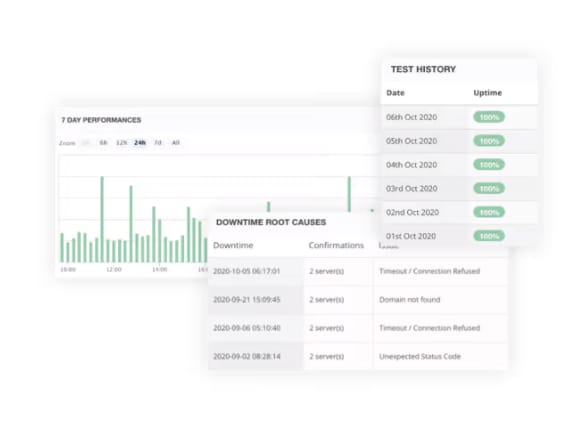
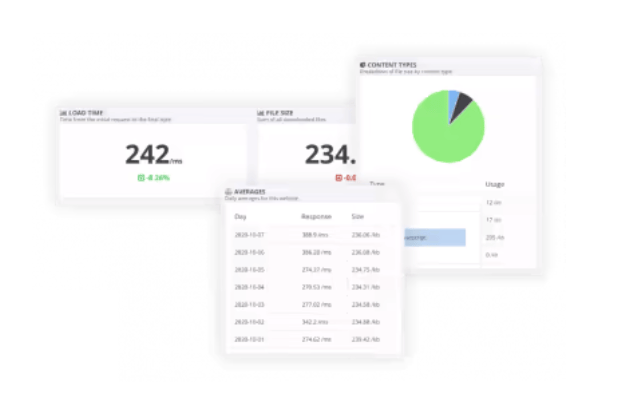
Although Black Friday puts an intense amount of pressure on your website, this isn’t the only time that you need a website monitoring tool working in the background of your website. Your website can go down at any time, anywhere, and it can take hours for you to realise, and even longer for your team to get it back up and running. If you’re not convinced, then you may be interested to know that even the biggest websites in the world have experienced downtime including Google, Facebook, and Slack, to name just a few.
You can prepare this Black Friday by taking advantage of our 40% off any paid plan discount. Stay online, drive revenue = simple!

3 min read IPFS is a game-changer for decentralised storage and the future of the web, but it still requires active monitoring to ensure everything runs smoothly.

3 min read For any web developer, DevTools provides an irreplaceable aid to debugging code in all common browsers. Both Safari and Firefox offer great solutions in terms of developer tools, however in this post I will be talking about the highlights of the most recent features in my personal favourite browser for coding, Chrome DevTools. For something

6 min read There has certainly been a trend recently of using animations to elevate user interfaces and improve user experiences, and the more subtle versions of these are known as micro animations. Micro animations are an understated way of adding a little bit of fun to everyday user interactions such as hovering over a link, or clicking

2 min read Read about the latest websites that have experienced downtime including Netflix, Twitter, Facebook and more inside!

2 min read Read about how Google suffered an outage due to the soaring temperatures in the UK in July and how they rectified it right here!

3 min read See the results of our website downtime survey to see some of the most shocking and surprising stats! You won’t be disappointed.