

Want to know how much website downtime costs, and the impact it can have on your business?
Find out everything you need to know in our new uptime monitoring whitepaper 2021


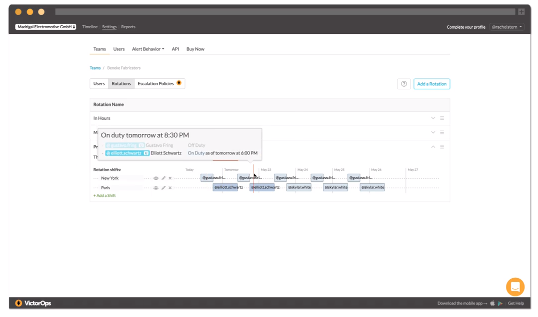
The VictorOps application is an incident management system built specifically for DevOps. It’s focus on system data and team collaboration makes it an excellent choice for ensuring that StatusCake alerts go to the right person at the right time, which will reduce alert fatigue and ultimately increase uptime.
VictorOps comes with a variety of handy features, including:
As with our other integrations, you can run VictorOps on any platform, from mobile to desktop and beyond! It’s also possible to use this application in conjunction with some of our other integrations like Slack. If you’d like to read some information on integrating Slack with VictorOps just check here.
VictorOps is very easy to set up in the StatusCake app as an alerting integration, and the entire process can be completed in less than five minutes. You can check out our guide for setting up the VictorOps integration here.
Share this
3 min read In the first two posts of this series, we explored how alert noise emerges from design decisions, and why notification lists fail to create accountability when responsibility is unclear. There’s a deeper issue underneath both of those problems. Many alerting systems are designed without being clear about the outcome they’re meant to produce. When teams
3 min read In the previous post, we looked at how alert noise is rarely accidental. It’s usually the result of sensible decisions layered over time, until responsibility becomes diffuse and response slows. One of the most persistent assumptions behind this pattern is simple. If enough people are notified, someone will take responsibility. After more than fourteen years
3 min read In a previous post, The Incident Checklist: Reducing Cognitive Load When It Matters Most, we explored how incidents stop being purely technical problems and become human ones. These are moments where decision-making under pressure and cognitive load matter more than perfect root cause analysis. When systems don’t support people clearly in those moments, teams compensate.
4 min read In the previous post, we looked at what happens after detection; when incidents stop being purely technical problems and become human ones, with cognitive load as the real constraint. This post assumes that context. The question here is simpler and more practical. What actually helps teams think clearly and act well once things are already
3 min read In the previous post, we explored how AI accelerates delivery and compresses the time between change and user impact. As velocity increases, knowing that something has gone wrong before users do becomes a critical capability. But detection is only the beginning. Once alerts fire and dashboards light up, humans still have to interpret what’s happening,
5 min read In a recent post, I argued that AI doesn’t fix weak engineering processes; rather it amplifies them. Strong review practices, clear ownership, and solid fundamentals still matter just as much when code is AI-assisted as when it’s not. That post sparked a follow-up question in the comments that’s worth sitting with: With AI speeding things
Find out everything you need to know in our new uptime monitoring whitepaper 2021