
Want to know how much website downtime costs, and the impact it can have on your business?
Find out everything you need to know in our new uptime monitoring whitepaper 2021


We currently integrate with a wide range of notification systems and applications to which we can send through our Up or Down alerts based on the health and status of your website on StatusCake.
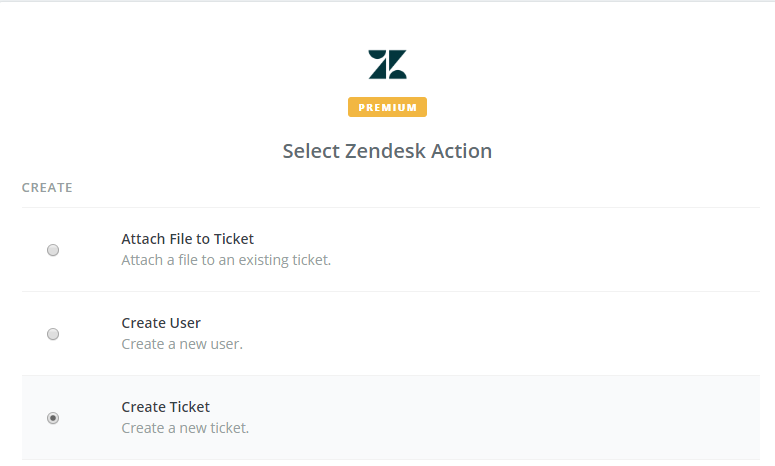
Sometimes though, it’s great to have these alerts coming through to a system that’s not classically used for notifications. Today we’ll take a look at how you can have your downtime alerts sent to the Zendesk Customer Service Software & Support Ticket System.
Having your customer support queries, and downtime alerts sitting side by side can be an effective way of diagnosing customer reports, and allows the support team to more effectively communicate issues to dev-ops.
You can set up this integration between StatusCake and Zendesk in under 5 minutes, and from the point of completed configuration everything will be automated so no further action will be required. It’s fully possible however if needed to modify the settings later on.
One that’s complete you will see each downtime alert inserted as a ticket into your Zendesk dashboard, these can then be correlated with customer reports, or passed straight to the team responsible for dealing with the problems.
Share this
4 min read How AI Is Shifting Software Engineering’s Primary Constraint For most of the history of software engineering, the primary constraint was production. Code was expensive, skilled engineers were scarce, and shipping features required concentrated human effort. Velocity was limited by how fast people could reason, implement, test, and deploy. That constraint shaped everything from team size,
5 min read Autonomous Code, Trust Boundaries, and Why Governance Now Matters More Than Ever In Part 1, we looked at how AI has reduced the cost of building monitoring tools. Then in Part 2, we explored the operational and economic burden of owning them. Now we need to talk about something deeper. Because the real shift isn’t
6 min read The Real Cost of Owning Monitoring Isn’t Code — It’s Everything Else In Part 1, we explored how AI has dramatically reduced the cost of building monitoring tooling. That much is clear. You can scaffold uptime checks quickly, generate alert logic in minutes, and set-up dashboards faster than most teams used to schedule the kickoff
5 min read AI Has Made Building Monitoring Easy. It Hasn’t Made Owning It Any Easier. A few months ago, I spoke to an engineering manager who proudly told me they had rebuilt their monitoring stack over a long weekend. They’d used AI to scaffold synthetic checks. They’d generated alert logic with dynamic thresholds. They’d then wired everything
3 min read In the previous posts, we’ve looked at how alert noise emerges from design decisions, why notification lists fail to create accountability, and why alerts only work when they’re designed around a clear outcome. Taken together, these ideas point to a broader conclusion. That alerting is not just a technical system, it’s a socio-technical one. Alerting
3 min read In the first two posts of this series, we explored how alert noise emerges from design decisions, and why notification lists fail to create accountability when responsibility is unclear. There’s a deeper issue underneath both of those problems. Many alerting systems are designed without being clear about the outcome they’re meant to produce. When teams
Find out everything you need to know in our new uptime monitoring whitepaper 2021