



Want to know how much website downtime costs, and the impact it can have on your business?
Find out everything you need to know in our new uptime monitoring whitepaper 2021

It might be April but this is no April Fools, this blog contains 404 pages that are actually a welcomed sight. I know what you’re thinking, it’s Friday and I’ve started early but it really is a thing. I’ve put together the cleverest 404 pages (even ones that just have a picture of a cute dog because, well, really) to show you that even when you experience downtime, you can still engage with your audience:
I don’t like to toot our own horn here but we do have a very fun 404 page, although we hope you never actually have to see it.
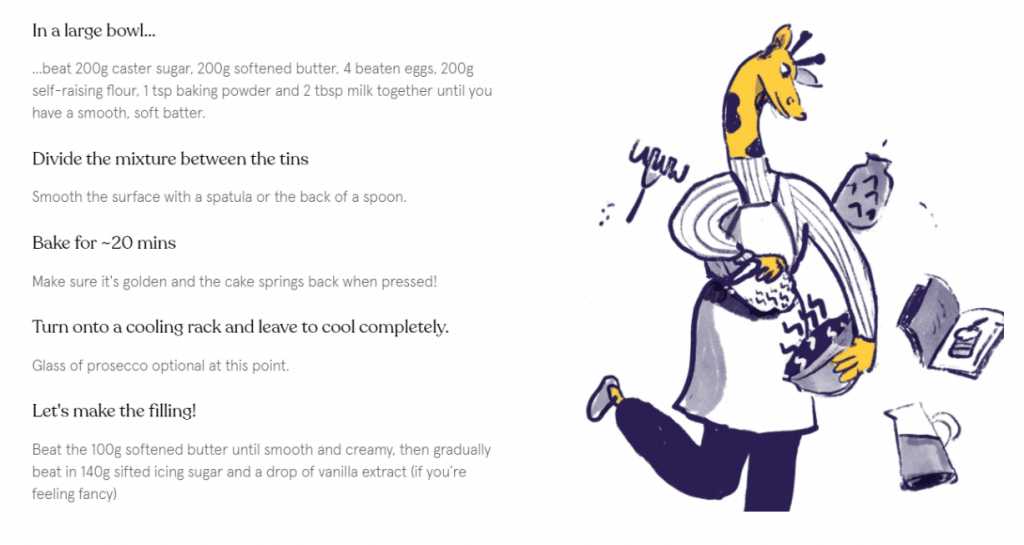
Ours features Geri the Giraffe (our in-house StatusCake baker) who’s whipping up a storm on our 404 page alongside a very tasty cake recipe for you. The surprise? Some people have actually emailed in pictures of the cakes they’ve made with the recipe! Just call us the Great British StatusCake off.
You’d expect a brand as big as Lego to never experience website downtime, unfortunately, they do. That’s why they’ve made sure their 404 pages get everyone talking for all of the right reasons. Check this one out – Everything is still awesome!

As a marketing company, HubSpot knows how to get its messaging right, even on the fateful 404 pages. It’s all about the romantic vibes on this one; full of heartbreak, until we meet again’s and keeping the spark alive’s! Cute.

Mashable’s 404 page had us all giggling away at StatusCake HQ (currently, our own living rooms during lockdown), especially since 99.9% of us can relate. Somehow Mashable just knows we’ve lost a multitude of socks over the past few months, even though we got a ton for Christmas. At least landing on this 404 page had us feeling optimistic about warm feet again…

Blogging platform Medium has opted for a more thought-provoking 404 page – makes sense seeing as it’s all about creative content. This 404 page is used to make readers actually think in a way that could inspire their next piece of writing – genius, right?

Speaking of being a genius, Zendesk’s 404 page is subtle but has proven a firm favourite. For starters, whoever lands on the page is immediately labelled part of the “elite few” (I’m steadying my crown as we speak) and secondly, you can see that you’re only 0.5% of people that have found it! Move along Indiana Jones, I’m the real treasure-finder here…
If you put a cute animal on your 404 page, it’s likely that it’ll get a lot of attention, that’s just what we’re like as humans. If you put an animated hamster along with wizardry, you’ve almost blown the minds of everyone who has ever lived – Discord did just that. Their 404 page remains one of the most talked-about, especially since the revelation that Discord is run by quantum robot hamsters – what a Slack call that would make.

Spotify has always been in the running for the greatest 404 pages, ever since the 404 that had a picture of Justin Bieber and lyrics from his number one hit song “Sorry”. It seems that Spotify have opted for a more simple approach, bringing us the retro vibes of a turntable with a trusty old vinyl. Ahh, Spotify, thanks for the memories.

Much like Spotify, Hootsuite’s 404 page takes us on a trip down memory lane (less so with the dinosaurs, I’m not that old). I do, however, beg to differ that both the Beatles and typewriters do still exist and still have a chance of coming back – holidaying on a yellow submarine typing out this blog on a 1965 typewriter, reminiscing about yesteryear.

If you’re a movie fan then IMDb’s 404 pages are going to be quite the treat. Every time you land on one, you get a different movie quote from some of the most popular films of all time. They made me follow the yellow brick road all the way to getting this one…

Speaking of movies, Pixar knows how to make us actively search for its 404 page by using Inside Out as a reference. “Aww don’t cry” gets me every time, and has undoubtedly made a few hundred people take to Netflix to watch this cracker of a film again. Great marketing.

Disney follows suit with a very clever 404 page – if you’re a fan of Monster’s Inc., you’re going to really enjoy this one. Everyone’s favourite little green guy, Mike Wazowski, hasn’t been able to find the door that you’re looking for, even with his giant eye working to the max! Good one Disney, I love it. (Disclaimer for Disney fans everywhere: I know Monster’s Inc. is Pixar but Disney now owns Pixar and has decided to go with this bad boy. Take it up with them!)

I thought we’d end the 404 page examples with one of the most well-known companies of all time and their use of a completely random 404 concept. Meet Amazon and its dogs. Every now and again, Amazon will display a different dog (or dogs) that you can meet, last time I met Phil, this time I got this guy.

That brings us to the end of the most creative 404 pages of the year, but if you think yours should make the cut, feel free to drop us a line (just make sure it’s on par with wizard hamsters). If you’re struggling to keep up with your 404 pages, or you’re not aware of when your pages or even your website goes down, try StatusCake to monitor all of your uptime for you. We’ve got free and paid plans for you to utilise so you can make sure that you’re always online. And if you’re not, take inspiration from these pages, you might just go viral!
